Promptus Logo Log In Sign Up Download

Here is a comprehensive design prompt optimized for generating a hybrid LEGO-3D…

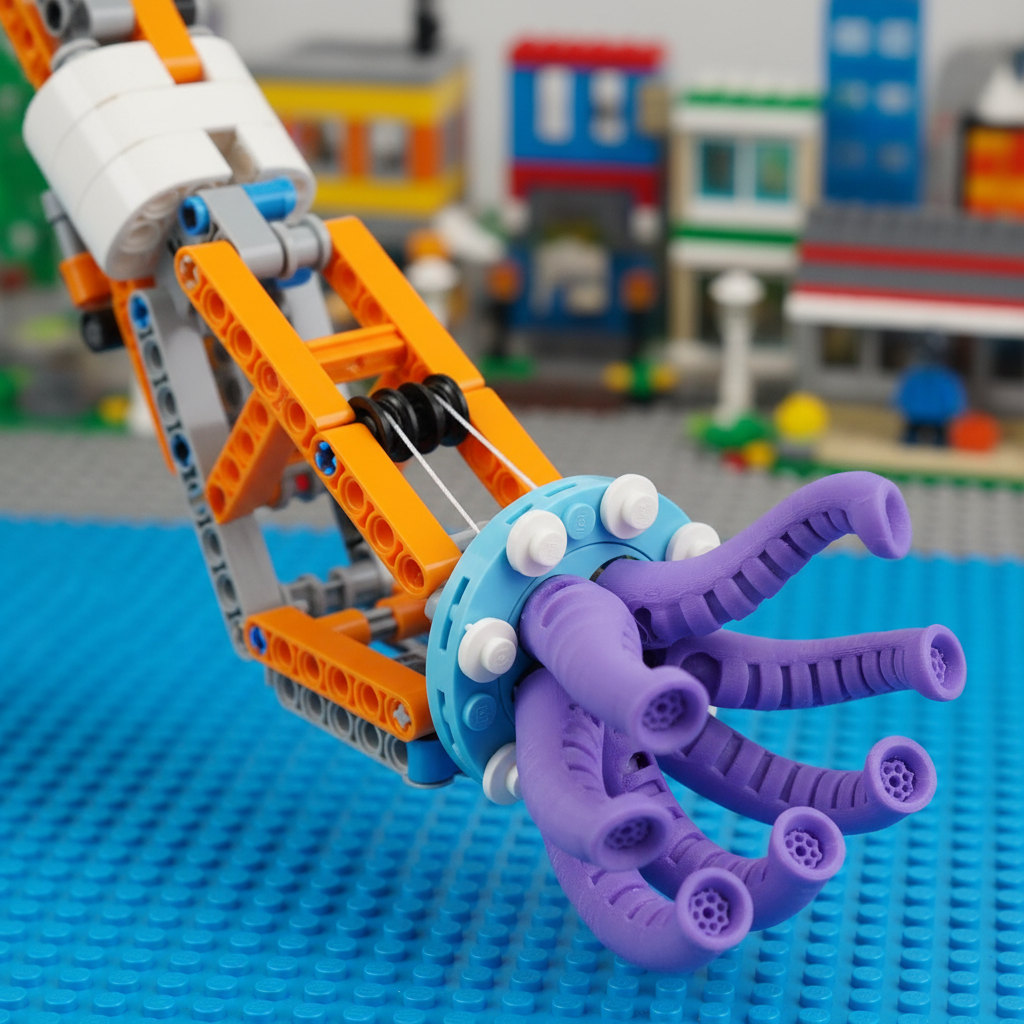
Here is a comprehensive design prompt optimized for generating a hybrid LEGO-3D printed tentacle prosthetic. This prompt integrates specific constraints for medical compliance, weight reduction, and modular interfacing to address the previously identified hurdles.  ### Design Prompt: Hybrid LEGO-Soft Robotic Tentacle Prosthetic  Role: Act as a biomedical engineer and industrial designer specializing in assistive technology and soft robotics.  Task: Generate a detailed technical design specification and assembly guide for a hybrid prosthetic arm that integrates a structural LEGO Technic skeleton with 3D-printed soft tentacle grippers.  Design Constraints & Requirements:  1.  Interface Architecture (The "Hybrid" Joint):     *   Design a custom 3D-printed adapter plate that connects standard LEGO Technic beams (using axle holes or pin interfaces) to the base of the tentacle gripper.     *   The adapter must allow for quick-disconnect functionality (plug-and-twist) to leverage LEGO’s modularity while ensuring the soft gripper base is rigidly locked to prevent torque slippage.     *   *Constraint:* The interface must distribute load evenly to prevent stress concentration on individual LEGO studs.  2.  Soft Gripper Specifications (Medical Compliance):     *   Model 4 to 6 tapered tentacles inspired by octopus arms, designed for compliant grasping of irregular objects.     *   Material: Specify usage of TPU (Thermoplastic Polyurethane) 85A-95A or flexible silicone-like resin to eliminate pressure points and mimic biological tissue compliance.     *   Structure: Incorporate internal pneumatic channels or tendon-routing hollow cores (for cable-driven actuation) within the tentacles.     *   Surface Texture: Include a micro-textured or suction-cup pattern on the inner curvature of the tentacles to enhance grip friction without high clamping force, reducing the risk of dropping objects for users with limited strength.  3.  Weight & Structural Optimization:     *   The LEGO chassis must utilize hollow lattice structures or minimal beam configurations to reduce distal weight.     *   The 3D-printed tentacles must use gyroid or honeycomb infill patterns (10-15% density) to maximize flexibility while minimizing mass, directly addressing the inability to tolerate heavy devices.     *   Total target weight of the end-effector (gripper + adapter) must not exceed 250 grams.  4.  Actuation Mechanism:     *   Design a body-powered cable system compatible with LEGO pulleys and strings, where wrist flexion pulls tendons running through the tentacle cores to induce curling.     *   Alternatively, provide a mount for micro-servo motors housed within the LEGO forearm section for myoelectric control, ensuring wires are routed internally to prevent snagging.  5.  Customization & Accessibility (Socioeconomic Focus):     *   The design must be parametric, allowing the socket interface to be scaled based on simple limb circumference measurements (no professional casting required).     *   Ensure all 3D-printed parts are support-free or use soluble supports to allow printing on low-cost, single-extruder printers common in developing regions.     *   Provide a Bill of Materials (BOM) that prioritizes globally available LEGO Technic elements and standard fishing line (Spectra/Dyneema) for tendons.

Prompt:

Here is a comprehensive design prompt optimized for generating a hybrid LEGO-3D printed tentacle prosthetic. This prompt integrates specific constraints for medical compliance, weight reduction, and modular interfacing to address the previously identified hurdles. ### Design Prompt: Hybrid LEGO-Soft Robotic Tentacle Prosthetic Role: Act as a biomedical engineer and industrial designer specializing in assistive technology and soft robotics. Task: Generate a detailed technical design specification and assembly guide for a hybrid prosthetic arm that integrates a structural LEGO Technic skeleton with 3D-printed soft tentacle grippers. Design Constraints & Requirements: 1.  Interface Architecture (The "Hybrid" Joint):     *   Design a custom 3D-printed adapter plate that connects standard LEGO Technic beams (using axle holes or pin interfaces) to the base of the tentacle gripper.     *   The adapter must allow for quick-disconnect functionality (plug-and-twist) to leverage LEGO’s modularity while ensuring the soft gripper base is rigidly locked to prevent torque slippage.     *   *Constraint:* The interface must distribute load evenly to prevent stress concentration on individual LEGO studs. 2.  Soft Gripper Specifications (Medical Compliance):     *   Model 4 to 6 tapered tentacles inspired by octopus arms, designed for compliant grasping of irregular objects.     *   Material: Specify usage of TPU (Thermoplastic Polyurethane) 85A-95A or flexible silicone-like resin to eliminate pressure points and mimic biological tissue compliance.     *   Structure: Incorporate internal pneumatic channels or tendon-routing hollow cores (for cable-driven actuation) within the tentacles.     *   Surface Texture: Include a micro-textured or suction-cup pattern on the inner curvature of the tentacles to enhance grip friction without high clamping force, reducing the risk of dropping objects for users with limited strength. 3.  Weight & Structural Optimization:     *   The LEGO chassis must utilize hollow lattice structures or minimal beam configurations to reduce distal weight.     *   The 3D-printed tentacles must use gyroid or honeycomb infill patterns (10-15% density) to maximize flexibility while minimizing mass, directly addressing the inability to tolerate heavy devices.     *   Total target weight of the end-effector (gripper + adapter) must not exceed 250 grams. 4.  Actuation Mechanism:     *   Design a body-powered cable system compatible with LEGO pulleys and strings, where wrist flexion pulls tendons running through the tentacle cores to induce curling.     *   Alternatively, provide a mount for micro-servo motors housed within the LEGO forearm section for myoelectric control, ensuring wires are routed internally to prevent snagging. 5.  Customization & Accessibility (Socioeconomic Focus):     *   The design must be parametric, allowing the socket interface to be scaled based on simple limb circumference measurements (no professional casting required).     *   Ensure all 3D-printed parts are support-free or use soluble supports to allow printing on low-cost, single-extruder printers common in developing regions.     *   Provide a Bill of Materials (BOM) that prioritizes globally available LEGO Technic elements and standard fishing line (Spectra/Dyneema) for tendons.

Generated with the Lego AI Image Generator AI model on Promptus. Try a prompt of your own.